

STRATCOM Summit 2026: RTÜK President Mehmet Daniş Addresses Global Digital Transformation in Istanbul
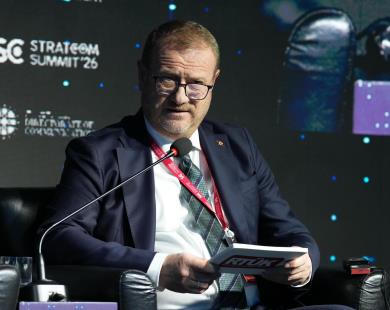
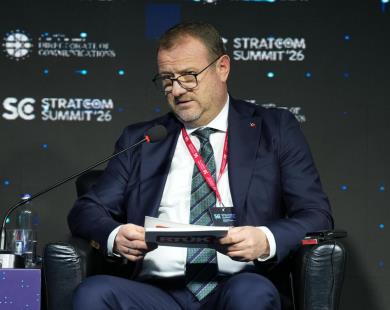
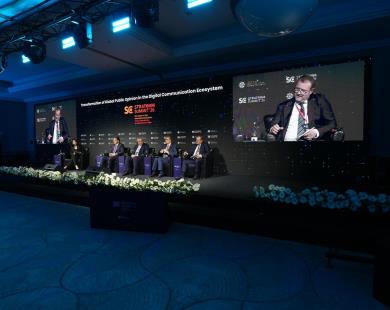
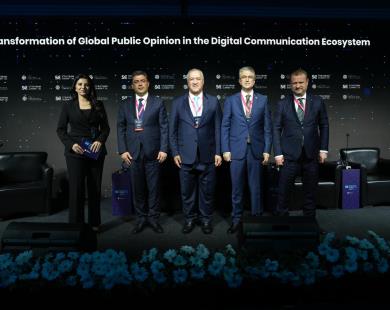
The STRATCOM Summit 2026, hosted by the Presidency of the Republic of Türkiye Directorate of Communications, convened in Istanbul under the theme “Disruption in the International System: Crises, Narratives, and the Search for Order.” The summit opened with a video keynote from President Recep Tayyip Erdoğan and featured Mehmet Daniş, President of the Radio and Television Supreme Council (RTÜK), as a principal speaker on the panel titled “Transformation of Global Public Opinion in the Digital Communication Ecosystem.”
Now in its sixth year, the International Strategic Communication Summit, which began with opening remarks by Vice President of the Republic of Türkiye, Dr. Cevdet Yılmaz and Head of Communications of the Republic of Türkiye, Prof. Dr. Burhanettin Duran, served as a high-level platform for policymakers, communication professionals, and academics from across the globe to exchange insights on how strategic communication can bolster international resilience and build a more stable global framework.
A New Societal Question: “How is this content affecting me?”
During his address, President Mehmet Daniş highlighted a fundamental shift in the paradigm of media discourse. He observed that for decades, the industry focused on metrics like "likes," "ratings," and "freedom of expression." However, he argued that the modern audience is now asking a much more visceral question: “How is this content affecting me?”
“In the context of today’s media reality, this question translates to: ‘Protect me from what I watch,’” Daniş explained. He clarified that this sentiment does not represent a demand for state-mandated censorship of all content, but rather reflects an urgent societal need to safeguard mental and moral boundaries. He noted that the public increasingly rejects hidden agendas, adopting the stance: “Do not deceive me or conceal the impact—I want to know exactly what I am being exposed to.”
To address these concerns, Daniş underscored RTÜK’s commitment to a “responsible broadcasting” model centered on the “3A Formula”: the protection of Reason (Akıl), the Family (Aile), and Morality (Ahlak). This framework, he noted, serves as both a national guiding principle and a universal ethical responsibility.
Navigating the Risks of Synthetic Media
Addressing the challenges of the digital age, Daniş warned that the traditional media order has been supplanted by a global sphere of interaction that demands shared accountability. While the rise of synthetic media—powered by Artificial Intelligence (AI) and deep learning—offers scalability, it also introduces systemic risks, including identity manipulation and the erosion of objective reality.
“This hybrid transformation redefines truth and trust,” Daniş stated. “It has elevated the concepts of oversight, liability, and public safety to the level of strategic national priorities.”
A Call for Global Solidarity and Proactive Supervision
The RTÜK President emphasized that a reliable digital ecosystem cannot be maintained through national policy alone; it requires regional and global solidarity. He identified three critical focal points for international cooperation:
- Transformation of the content ecosystem.
- The crisis of trust and accuracy.
- Cultural and value-based impacts.
He described media literacy as a matter of national security rather than a mere educational goal, particularly in the face of deepfake technologies and organized disinformation campaigns.
The Move Toward AI-Powered Regulation
Highlighting RTÜK’s technical evolution, Daniş noted that the Council has shifted from reactive monitoring to a proactive, preventive approach.
“AI-powered monitoring systems are becoming vital to our operations,” he revealed. “Since digital platforms are inherently transnational, we are intensifying our diplomatic role within global regulatory networks.”
He cited the 2018 amendment to Law No. 6112 (Article 29/A) and the subsequent 2019 regulations as the legal foundation that brought digital platforms under RTÜK’s supervision. Daniş also pointed to active bilateral partnerships with authorities in Albania and Azerbaijan, as well as coordination through international bodies like EPRA, BRAF, IBRAF, and TBRAF.
Emphasis on Digital Media Literacy
Daniş stated that raising global public awareness is one of the most effective methods in combating disinformation, and emphasized the need to increase collaboration in this area with educational institutions, civil society organizations, and the media.
“In the digital age, power lies not in producing information, but in the capacity to manage it ethically, accurately, and responsibly,” said Daniş, emphasizing that an international media understanding that prioritizes ethical values should be built together.
Strategic Management in the "Century of Communication"
Closing his remarks, Daniş redefined communication as a dynamic, bidirectional, and strategic management field rather than a static support function. He asserted that the successful institutions of the future will be those that prioritize data-driven transparency, trust, and ethical values.
“Those who manage this field with a quantum leadership perspective will shape the future,” Daniş concluded, reaffirming RTÜK’s dedication to the “Century of Communication” vision set forth by President Erdoğan.